
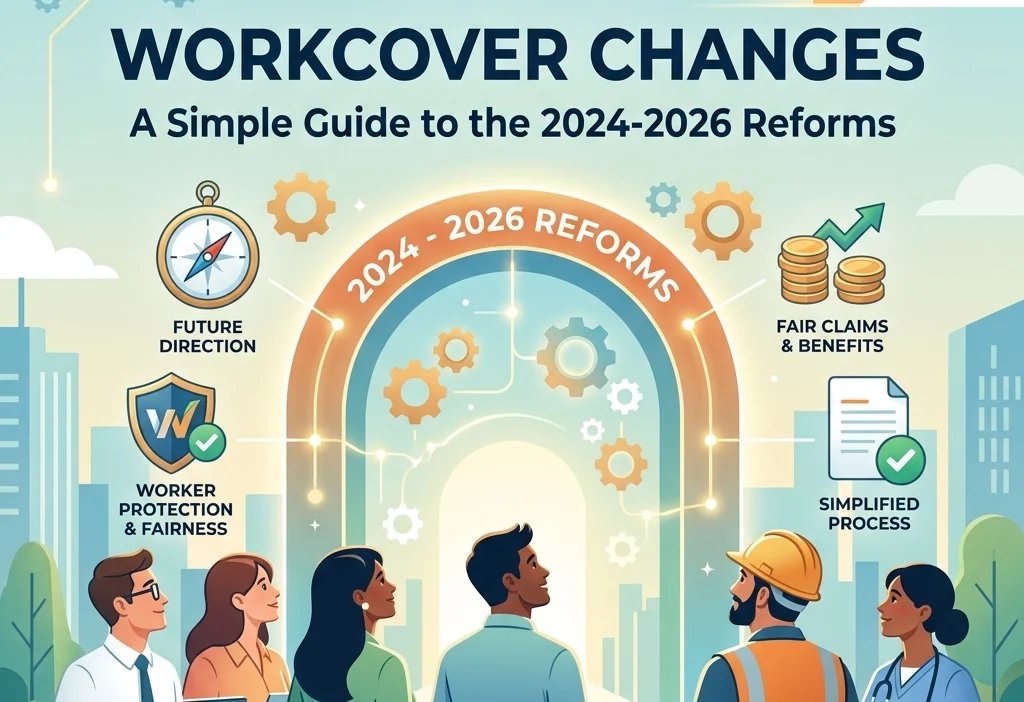
If you’ve been following the news or talking to doctors lately, you’ve probably heard that things are changing in the world of Victorian WorkCover. It can feel a bit overwhelming, especially when you’re already dealing with an injury and trying to get back on your feet.
The Victorian Government recently introduced the Workplace Injury Rehabilitation and Compensation Amendment (WorkCover Scheme Modernisation) Act 2024. These are the biggest changes we’ve seen in decades, and they officially kicked off on 31 March 2024.
Whether you have an existing claim or you’re thinking about starting one, these new rules change the "goalposts" for who gets support and for how long. At WorkCover Check Australia, we believe you shouldn't need a law degree to understand your rights. This guide breaks down exactly what happened and what it means for you.
The Quick Answer: What has actually changed?
In short, the Victorian Government has made it harder to qualify for WorkCover, particularly for mental health injuries. They have also added a much tougher "test" to see if you can keep receiving weekly payments after two and a half years (130 weeks).
The key changes include:
- New Mental Injury Rules: You now need to prove "significant dysfunction" and that work was the "predominant cause" of the injury.
- Stress and Burnout Exclusions: General work-related stress and burnout are now mostly excluded from weekly payments.
- The 130-Week Cliff: To keep getting paid after 130 weeks, you now need a 21% or higher "Whole Person Impairment" (WPI) rating.
- Return to Work Victoria: A new agency has been created to focus purely on helping people get back into the workforce.
If you are worried about how these changes affect your specific situation, you can use our WorkCover Check tool to see where you stand in about 60 seconds.
1. The 2024 "Modernisation" Act: Why did this happen?
On 31 March 2024, the new laws came into effect. The government argued that the WorkCover system was "broken" financially because people were staying on the scheme for longer and mental health claims were skyrocketing.
To "fix" the budget, they tightened the rules. For you, the worker, this means the bar has been raised. It is now more important than ever to have the right medical evidence and legal support from day one, because the system is designed to be more restrictive than it used to be.

2. New Rules for Mental Health Injuries
This is the area with the biggest shift. Previously, if work was a "significant contributing factor" to a mental injury (like depression or anxiety), you were usually covered. Now, the rules are much stricter.
The "Significant Dysfunction" Test
To have a mental health claim accepted for weekly payments now, your condition must cause "significant dysfunction." This means it isn't enough to feel stressed or upset; the injury must significantly impact your ability to function in your daily life and work.
The "Predominant Cause" Rule
This is a major hurdle. It is no longer enough for work to be "a" cause; it must be the predominant cause (more than 50%) of the injury. If you have had previous mental health struggles or issues at home, the insurer might try to argue that work wasn't the main cause, which could lead to a rejection.
Rejection Rates are Rising
Since these rules came in, the rejection rate for mental health claims has roughly doubled. Insurers are using these new definitions to knock back claims that would have been accepted just a year ago.
3. Stress and Burnout: The New Exclusions
One of the most controversial parts of the 2024 reforms is the exclusion of "typical" work stress.
If your injury is caused by things like:
- Standard workload pressure
- Typical office politics
- General burnout from long hours
…you are likely now excluded from receiving weekly compensation payments.
The Exception: Provisional Payments
There is a small silver lining. Even if your claim for weekly payments is rejected under these new rules, you may still be eligible for "provisional payments." This covers the cost of medical treatment (like seeing a psychologist) for up to 13 weeks while your claim is being assessed. Even if the claim is eventually denied, you don't have to pay that money back.
4. The 130-Week Review (The 21% Rule)
Most Victorian workers know about the "130-week review." This is the point where the insurer checks if you are still entitled to weekly payments.
The Old Rule: You just had to prove you had "no current work capacity" and that this was likely to continue indefinitely.
The New Rule: Now, you need to pass two tests. You must still have no work capacity, AND you must have a Whole Person Impairment (WPI) of 21% or higher.

What is 21% WPI?
Whole Person Impairment is a percentage used by doctors to measure how much an injury has permanently affected your body or mind.
- A 21% rating is a very high bar.
- Many physical injuries (like back surgeries or joint replacements) often result in ratings between 5% and 15%.
- Reaching 21% usually involves very severe, life-altering injuries.
If you reach 130 weeks and your impairment is rated at, say, 10%, your weekly payments will likely stop, even if you still can't work. This is why many are calling it the "130-week cliff."
Need help navigating a 130-week review?
The new rules are complex, and the medical assessments are vital. You can connect with a specialist Victorian lawyer through WorkCover Check Australia to ensure your impairment is assessed fairly.
5. Return to Work Victoria
As part of the reforms, the government launched a new business unit called Return to Work Victoria.
The goal of this agency is to move away from just "managing a claim" and focus on getting people back into jobs. They provide resources, retraining, and support for both workers and employers. While the intention sounds positive, getting people healthy and back to work, it also means there will be a lot more pressure on workers to accept "light duties" or look for new types of employment earlier in the process.
6. Common Mistakes to Avoid Under the New Rules
With the rules changing, the "old way" of doing things can get you into trouble. Here are the most common traps we are seeing:
- Vague Medical Certificates: A certificate that just says "stress" will almost certainly be rejected now. Your GP needs to be very specific about the diagnosis and how it causes "significant dysfunction."
- Missing the 30-Day Window: You still only have 30 days to report an injury. Under the new strict environment, insurers are looking for any reason to deny a claim.
- Not Preparing for the 130-Week Review Early: Don't wait until week 129 to think about your WPI rating. You need to start gathering evidence and understanding your impairment levels much earlier.
- Going it Alone: The new "predominant cause" test is a legal minefield. Trying to argue this with an insurer on your own is difficult.

How WorkCover Check Australia Can Help
The 2024-2026 reforms have made the Victorian WorkCover system more complex and, frankly, more intimidating for the average worker. It feels like the odds are stacked against you, but you don't have to navigate this alone.
We built WorkCover Check Australia to give power back to the workers.
- The 60-Second Check: Our online tool helps you understand if you have a valid claim or if your current entitlements are being handled correctly.
- Expert Connection: If your situation is complex, especially with the new 21% rule or a mental health rejection, we can connect you with a specialist Victorian WorkCover lawyer. These experts work on a "No Win, No Fee" basis, so you can get the help you need without upfront costs.
FAQs: Your Questions Answered
I’m already on WorkCover. Do the new rules affect me?
Yes, they might. While the mental health rules usually apply to new claims, the 130-week WPI test applies to many workers whose claims reach that milestone after the law changed. It is best to check with a professional to see if you are "grandfathered" under old rules or subject to the new ones.
What happens if my impairment is only 15%?
Under the new rules, if you reach the 130-week mark and your WPI is under 21%, your weekly payments will usually stop. However, your medical expenses (like GP visits and physio) may continue if you still need treatment for your work injury.
Can I appeal a "predominant cause" rejection?
Yes. If the insurer claims your injury wasn't mostly caused by work, you have the right to take the matter to the Workplace Injury Commission (conciliation) and potentially to court. Because this is a new legal definition, having a lawyer who understands the 2024 reforms is essential.
Is "Return to Work Victoria" the same as the insurer?
No. Return to Work Victoria is a government body focused on rehabilitation and employment. Your insurer (like EML, Allianz, or Gallagher Bassett) still handles the money and the approval of your medical treatments.
Don't let the new rules leave you behind.
The 2024 reforms have changed the landscape, but your right to a safe workplace and fair support hasn't disappeared. It just requires a more careful, informed approach.
Ready to see where you stand?
Head over to WorkCover Check Australia and complete our free questionnaire today. It’s the first step to making sure you get everything you’re entitled to.